What is allowed, what is banned, and how the lights work after dark
Photographing the Eiffel Tower at night for personal use is allowed. The firm limits are no drones near the monument, no tripods inside it, and prior permission for commercial or professional work. The sparkle is the part most visitors come for, and it follows a fixed pattern you can plan around.
This guide is for visitors who want night photos of the Tower without a security-line surprise or a request to move on. It covers what is permitted, what gets refused at the base, how the lighting runs, and where to stand. I am Finzi, and I live and work beside the Tower. These are the questions clients ask me before every night session.
Yes, for personal use. Photography is allowed, including the nighttime sparkling lights, and so is posting on social media. That covers phone shots, a camera on a bridge, and portraits of the two of you with the Tower behind.
The line moves when a photo has a commercial purpose. Professional photographers must get permission ahead of time for commercial photo and video recordings. The illuminated appearance is also subject to copyright claims for commercial use, so a stock agency, client campaign or paid publication needs more care than a personal post. If your plan is a brand shoot or a paid publication, ask the operator before you travel.
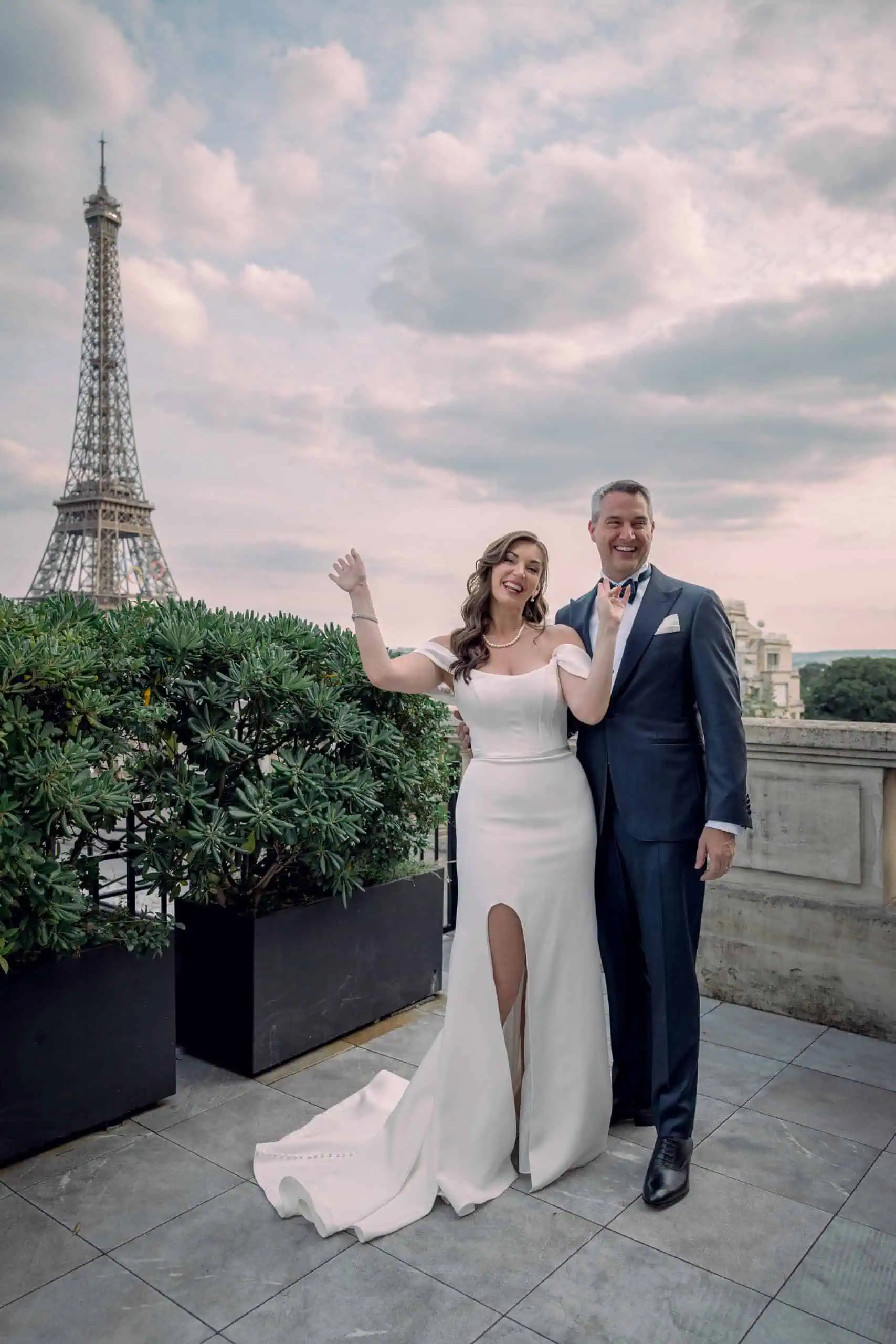
A private couple or family portrait session is a personal use case. I plan the position, timing and route so you only have to turn up.
TipNot sure whether your project counts as commercial? Ask the Tower's operator before you book anything.
| Package | Price | Duration | Photos | Locations |
|---|---|---|---|---|
| Essential | €300 | 1 hour | 30 photos | 1 location |
| Signature | €500 | 2 hours | 50 photos | 2 locations |
| Prestige | €800 | 3 hours | 60 photos | 3 locations |
Not on the monument, and the rules around it are inconsistent. Tripods are prohibited inside the Eiffel Tower, including its decks and summit. Tripods are allowed in many surrounding public areas, but not inside the Tower itself. Sources disagree on the detail, and one lists tripods as needing special authorization. Treat a tripod as something you may be asked to put away.
Even where you can set one up, staff can stop its use if it blocks movement or looks like a commercial shoot. The pavement around the base and the Trocadéro esplanade are crowded after dark, especially around each sparkle. A tripod there is a trip hazard, and the person asking you to move will not be impressed by the exposure you were chasing.
"I shoot night sessions handheld with a fast lens and a steady stance, so there is nothing to set up and nothing to be told to take down," Finzi says. "If a tripod is needed for a still frame, I pick a quiet corner away from the walkway and I fold it the moment anyone asks."
TipA tripod you cannot use is dead weight on a 3 to 5 km walk. Leave it at the hotel unless you have a specific plan.
Anyone going into the Tower passes a screening. All visitors go through airport-style security at the base, and large bags, suitcases and oversized backpacks are not permitted. There is no luggage storage at the Tower itself. A camera body, one or two lenses and a small bag are fine. A full kit bag is a problem.
The banned list is the usual one. Glass bottles, sharp objects, weapons, drones and fireworks are strictly prohibited. Scooters and bikes are not accepted on the esplanade or inside the Tower. If you are going up for night views, pack light and leave the extras behind.
On the open-air platforms, one habit matters for photographers. Do not reach through the grates with a phone or camera. A dropped item is dangerous to anyone below. Use a wrist strap.
TipPlan for the screening line before you plan for the photo. The wait is part of the visit.
Leave the drone at home. Drone flights are prohibited across the Paris area without specific authorisation from the Préfecture de Police, including around the Eiffel Tower, the Champ de Mars and the Trocadéro. Violators face heavy fines and confiscation.
This is a rule for night work as well as day work. A drone with lights is more conspicuous in the dark, not less. If you want an elevated angle, the Trocadéro terraces and the bridges across the Seine give you height without any permit.
The lights switch on at nightfall, so the start time moves with the season. The operator,Tour Eiffel, states "The Tower's golden lighting and beacon turn on when night falls." The lighting has three components: the golden lighting, the sparkles and the beacon. Light sensors trigger the golden lighting.
The sparkle is separate from the golden glow. The Tower sparkles for 5 minutes at the start of each hour. That gives you a short window on the hour. The number of sparkles changes with the calendar: a midsummer night can hold a single sparkle, while a winter evening has several.
The switch-off time has changed in recent years, and sources do not agree. The operator's page says the Tower's closing is followed by a full switch-off, with the final sparkles at that point. A hotel guide cites the City of Paris energy sobriety plan, under which all the lights turn off earlier in the evening. Check the operator's page for your date before you plan a late shot. I also check it before every night session I book.
TipIn midsummer the sky stays bright late, so there are fewer sparkles. Winter gives you the most chances.
You do not need to go up the Tower to photograph it lit. The operator names two spots: the Trocadéro esplanade and the Champ de Mars remain unbeatable spots to watch the lights turn on at night. Both are public open space, so the rules above (no drones, tripod tolerance at the discretion of staff) apply on the ground too.
Crowds peak at the sparkle. People gather on the hour, so a clean frame needs a position chosen in advance. "I start at the edge of the crowd, not the middle of it," Finzi says. "The side staircases and lower terrace at Trocadéro give me the Tower without a wall of phones, and I time the shot to the sparkle so we are in place before anyone else lifts a camera."
If someone in uniform asks you to move, move. Park staff, police and security decide what is acceptable on the day, and arguing costs you the light.
TipArrive before the hour, not on it. Finding a spot during the sparkle means you miss the sparkle.
The Night Session is €450. It runs 1 hour after sunset, with 30 edited photos at 1 location and the Eiffel Tower sparkle in frame. Gallery delivery is within 24 hours. I choose the position and the timing against the lighting pattern above, so the sparkle lands in your photos without you handling the crowds.
A €30 non-refundable deposit locks your date. Rescheduling is free anytime, which helps in autumn and winter when weather shifts. Sessions involve walking 3 to 5 km, so wear comfortable shoes and bring a warm layer for the evening. For a proposal, the Proposal session is €300 for 1 hour with a hidden camera, and the Night Session covers the post-sunset version.
Tell me your dates and the session you have in mind, and I will take it from there.
TipPick a date, send it to me, and I will check the lighting for that evening.
Quick answers to the questions visitors ask before they book.
“It was very special. Finzi is very caring and enjoyable. It was a dream photoshoot experience.”
Pick a session. Choose a date. I handle the rest.
BOOK NOW