What the Louvre, Orsay and City of Paris museums allow, ban and flag
Personal photography without flash is allowed in the permanent collections of the Louvre, the Musée d'Orsay and the City of Paris museums, while selfie sticks, lighting and camera stands are restricted. Temporary exhibitions and individual works can carry their own bans, and professional shoots need written permission from the museum.
This guide is for visitors who want to photograph the art, the architecture or each other without being stopped by a guard. The rules below come from the museums' own published conditions. I add what it means for planning a portrait session around a museum visit. Skip the museums you are not visiting.
Yes, in the permanent collection rooms of the major museums, as long as the photos are for personal use and you do not use flash. The Musée d'Orsay permits photography and video for strictly private purposes, and the City of Paris museum rules allow works in permanent collection rooms to be photographed or filmed for the visitor's private use only.
The pattern repeats across the three official sources I checked: handheld, no flash, no lighting, private use, and extra restrictions in temporary exhibitions. Smaller and specialist museums set their own rules, so check the museum's own visit page before you go. I did not find an official photography statement for every Paris museum, so I only cover the ones I could verify.
TipRead the museum's own visit page the week you travel. Rules change with each exhibition.
| Package | Price | Duration | Photos | Locations |
|---|---|---|---|---|
| Essential | €300 | 1 hour | 30 photos | 1 location |
| Signature | €500 | 2 hours | 50 photos | 2 locations |
| Prestige | €800 | 3 hours | 60 photos | 3 locations |
The Louvre states in its visitor FAQ that "You can take photos and videos in the permanent collections if they are for personal use." The same answer adds that selfie sticks, flash and lighting are not allowed. In some temporary exhibitions, certain artworks may not be photographed or filmed.
The FAQ answer does not mention tripods, but I would not test it. Leave the tripod at the hotel and shoot handheld. A phone or a camera with a stabilised lens is enough, and the galleries are too crowded to set up a stand anyway.
The building itself is also a subject. The Pyramid and the surrounding architecture are outside the paid galleries, and they are where most of my Louvre sessions happen.
TipTurn off auto flash in your phone camera settings before you walk in.
The Musée d'Orsay allows photos and video for strictly private purposes. The conditions are that flash is deactivated and that you do not impede other visitors' movement or comfort. Camera stands and lighting devices must be left in the cloakroom.
Some works may carry a photography ban, particularly in temporary exhibitions, and the ban is indicated on the label of the work. Check the label before you raise the camera. Travel sites that say photography is prohibited at the Orsay are out of date or wrong when set against the museum's own page.
Shooting and filming for collective or commercial use need the museum's prior authorisation. A family or couple photographing each other on a visit is private use. A planned shoot with a hired photographer is a different case.
TipStand to the side of a doorway or aisle. Blocking movement is the one behaviour the Orsay names directly.
The City of Paris runs its own group of museums under one common visit regulation. Its published Paris Musées visit rules are hosted on the Musée d'Art Moderne site, and the same document appears on other city museum sites such as the Cernuschi museum. The Petit Palais, the Carnavalet and the Musée d'Art Moderne belong to this group.
Article 36 covers shooting inside the galleries. Works in the permanent collection rooms may be photographed or filmed for the visitor's private use only. In temporary exhibition rooms, restrictions can be posted at the room entrance or near the works. Photographing or filming technical installations and equipment is forbidden.
The same regulation also deals with camera stands and telescopic poles, so travel without them. For anything beyond holiday photos, the rules say photography or filming meant for online posting or for sharing outside the private circle needs prior written authorisation from the museum's management, and a technical sheet describing the equipment is requested. If your plan is more than snapshots, email the museum first.
No. Flash is off at all three sources, and each one restricts supports or lighting. The Louvre names selfie sticks, flash and lighting, the Orsay sends camera stands and lighting to the cloakroom, and the City of Paris rules cover camera stands and telescopic poles.
Plan your kit around that. A body with a fast lens or a recent phone handles low gallery light without flash, and raising the ISO is the usual fix. If a guard stops you, the answer is to put the item away, not to argue.
"I treat a museum as a place to look and a phone-in-hand place to remember, not a studio," Finzi says. "The light is set for the paintings, not for people, so I keep portraits outdoors where the light works for you."
TipIf you carry a camera bag, expect a security check and possibly a cloakroom stop for larger items.
Temporary exhibitions are where most bans appear. The Louvre says some temporary exhibitions do not allow photos or videos of certain artworks, the Orsay flags banned works on the label, and the City of Paris rules put restrictions at the room entrance or by the work.
In practice, read the sign at the door of each room. A permission on the museum's website does not override a sign inside. If the museum has a loan show from a private collector or another institution, expect more restrictions than in the permanent galleries.
Do not photograph the technical installations either, such as cameras, alarms or service panels. The City of Paris regulation names this explicitly.
Not on a standard ticket. The Orsay states that collective or commercial shooting and filming require the museum's prior authorisation, and the Paris Musées rules ask for prior written approval from museum management. My sessions are outdoors, where I plan around the light and the crowd.
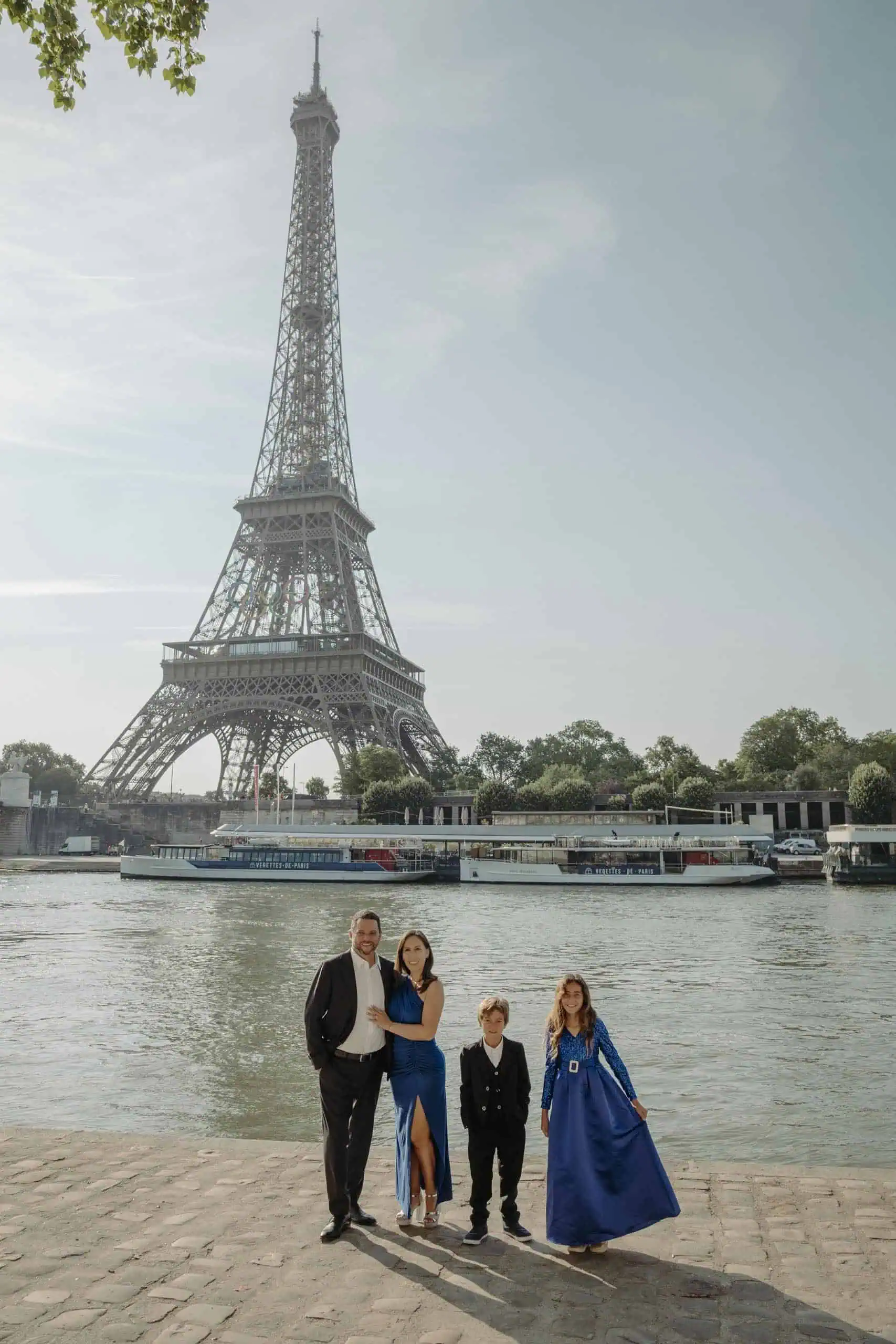
For a museum-themed session I use the outside of the building. At the Louvre that means the Pyramid and the architecture around it, and my tip there is to go early. Nearby, the Tuileries and Palais Royal give clean, quiet backdrops without asking anything of a museum. Most clients combine a museum visit with a session earlier in the day, then walk in with a phone and no flash.
Every session involves walking, 3 to 5 km depending on the package. Essential is €300 for 1 hour, 30 photos and 1 location. Signature is €500 for 2 hours, 50 photos and 2 locations, and it is the most popular. Prestige is €800 for 3 hours, 60 photos and 3 locations. A €30 non-refundable deposit locks your date, rescheduling is free anytime, and the gallery arrives within 24 hours.
TipPick a morning session, then spend the afternoon inside. You arrive at the museum with your photos already taken.
Before you leave the hotel, switch off flash, charge your battery and clear space on your phone. Check the museum's own visit page for the current rule and for any exhibition running during your dates. Pack light so you do not get stopped at the bag check.
Inside, shoot handheld, step out of walkways, read each label, and respect any sign at a room door. After you finish, post only what the private-use rule fits. If you plan anything more, such as a shoot for a business or a brand, get the museum's written authorisation first.
Quick answers to the questions visitors ask before they book.
“It was very special. Finzi is very caring and enjoyable. It was a dream photoshoot experience.”
Pick a session. Choose a date. I handle the rest.
BOOK NOW